Free self-employed tax calculator for 2025/26 (England, Wales and NI)
Updated 25 November 2026 · By CroftSheets (GPT Shop Ltd) · Figures checked against GOV.UK
Enter your figures for the 2025/26 tax year (6 April 2025 to 5 April 2026). Everything runs in your browser: nothing is sent or stored.
How it works
- Profit = turnover minus expenses (or minus the £1,000 trading allowance).
- Income Tax uses the 2025/26 bands for England, Wales and Northern Ireland: Personal Allowance £12,570 (reduced by £1 for every £2 over £100,000), 20% to £50,270, 40% to £125,140, 45% above.
- Class 4 National Insurance: 6% on profits between £12,570 and £50,270, 2% above.
- With a job, the calculator works out the extra tax caused by your self-employed profit, because PAYE usually covers the tax on your salary.
- Payments on account apply if the Self Assessment bill is £1,000 or more and less than 80% of your total tax was paid at source. In your first year, 31 January can mean the bill plus half again. Payments on account explained.
It doesn't model Scottish income tax bands, student loans, pension relief, savings, dividends, Gift Aid, Marriage Allowance or voluntary Class 2. Treat it as an estimate.
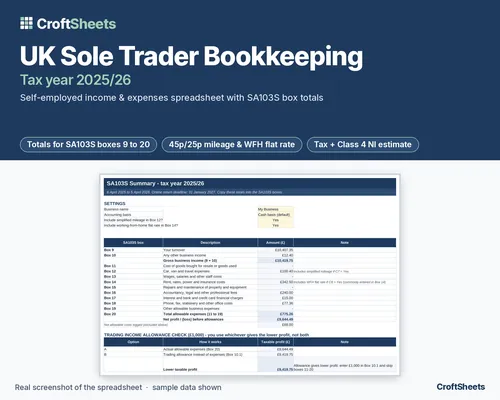
Sole Trader Self Assessment Spreadsheet 2025/26: File your 2025/26 UK Self Assessment with less stress. Track income, SA103S expenses, mileage and WFH flat rates for 6 Apr 2025-5 Apr 2026 in Excel or Sheets.
See the spreadsheet (£12.99)This guide is general information, not tax advice. Rules change and your situation may differ: check GOV.UK or ask a qualified accountant before you file.
Sources
- GOV.UK: Income Tax rates and Personal Allowances
- GOV.UK: Self-employed National Insurance rates
- GOV.UK: Payments on account
Related guides
- Self Assessment 2025/26 for sole traders: deadlines, rates and a checklist
- SA103S boxes explained: the short self-employment pages for 2025/26
- Sole trader bookkeeping spreadsheet (UK): what to record and how to set it up
- HMRC mileage rates for the self-employed: 45p in 2025/26, 55p from 6 April 2026
- Working from home allowance for the self-employed: the £10, £18 and £26 flat rates
- The £1,000 trading allowance in 2025/26: claim it, or claim your expenses?