Your first Self Assessment tax return as a sole trader: a step-by-step guide for 2025/26
Updated 25 November 2026 · By CroftSheets (GPT Shop Ltd) · Figures checked against GOV.UK
If you started working for yourself between 6 April 2025 and 5 April 2026 and earned more than £1,000 before expenses, your first online tax return and your first tax bill are both due by 31 January 2027. Here's the whole process, in order.
Step 1: Make sure you're registered
You were meant to register for Self Assessment by 5 October 2026. If you haven't, register now: you'll get a Unique Taxpayer Reference (UTR) by post, and you need it to file. If you register after 5 October and don't pay all your tax by 31 January, you may get a "failure to notify" penalty. See registering late.
Step 2: Set up your online account early
You file through HMRC online services using a Government Gateway user ID. Activation codes and UTRs come by post, so do this weeks before the deadline, not on 30 January.
Step 3: Gather a year of figures
- Every sale, invoice and platform payout from 6 April 2025 to 5 April 2026
- Every business cost, sorted into HMRC's categories (see our allowable expenses list)
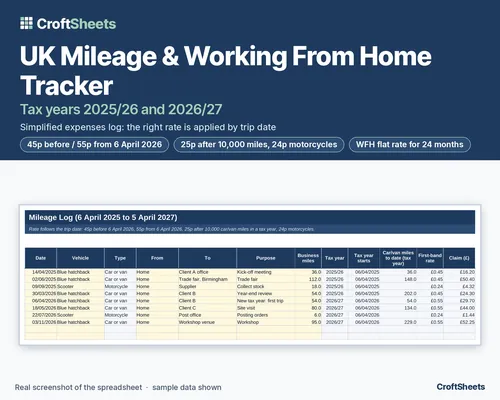
- Business miles driven and hours worked at home, if you use simplified expenses
- Any job income (your P60), savings interest, pension contributions and Gift Aid
Step 4: Decide: trading allowance or expenses?
You can deduct either your actual allowable expenses or the £1,000 trading allowance, not both. If your costs were under £1,000, the allowance usually wins. How to choose.
Step 5: Fill in the self-employment section
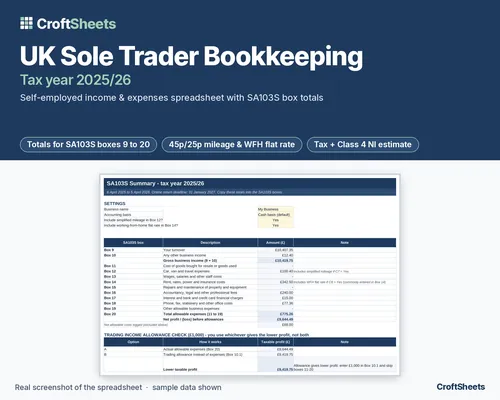
Most new sole traders use the short self-employment pages (SA103S): turnover in box 9, expenses in boxes 11 to 19, total expenses in box 20. Our SA103S box-by-box guide explains each one.
Step 6: Check the bill, including payments on account
This is the part that catches first-timers out. If your bill is £1,000 or more (and less than 80% of your tax was already taken at source), HMRC also asks for a first payment on account towards next year, equal to half this year's bill, on the same day. GOV.UK's own example works like this:
| Due date | What you pay (first year, 2025/26 bill of £3,000) |
|---|---|
| 31 January 2027 | £3,000 for 2025/26 + £1,500 first payment on account for 2026/27 = £4,500 |
| 31 July 2027 | £1,500 second payment on account for 2026/27 |
| 31 January 2028 | Any balancing payment for 2026/27, plus the first payment on account for 2027/28 |
Read payments on account explained, and try our free tax calculator to estimate your figure.
Step 7: Submit and pay by 31 January 2027
Miss the online deadline and there's an immediate £100 penalty, even if you owe nothing. Late penalties explained. Keep your records for at least 5 years after the 31 January deadline.
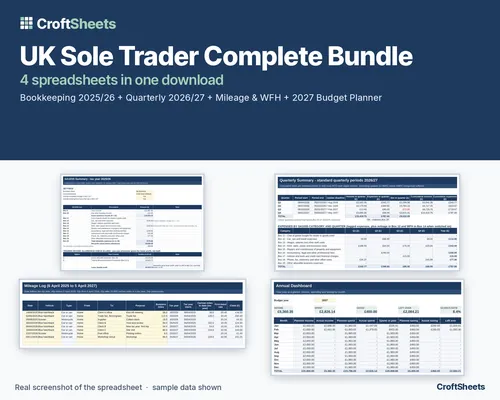
Sole Trader Self Assessment Spreadsheet 2025/26: File your 2025/26 UK Self Assessment with less stress. Track income, SA103S expenses, mileage and WFH flat rates for 6 Apr 2025-5 Apr 2026 in Excel or Sheets.
See the spreadsheet (£12.99)Sources
- GOV.UK: Register for Self Assessment
- GOV.UK: Self Assessment tax returns, deadlines
- GOV.UK: Payments on account
- GOV.UK: Self Assessment penalties
- GOV.UK: Tax-free allowances on property and trading income
Related guides
- Self Assessment 2025/26 for sole traders: deadlines, rates and a checklist
- SA103S boxes explained: the short self-employment pages for 2025/26
- Sole trader bookkeeping spreadsheet (UK): what to record and how to set it up
- HMRC mileage rates for the self-employed: 45p in 2025/26, 55p from 6 April 2026
- Working from home allowance for the self-employed: the £10, £18 and £26 flat rates
- The £1,000 trading allowance in 2025/26: claim it, or claim your expenses?
- Free self-employed tax calculator 2025/26